Homemade Puff Pastry (Easy Step-by-Step Guide)
While I’d made croissants at home before, I’d never made homemade puff pastry dough from scratch until I went to pastry school. So I learned all the tricks of the trade from the professionals and am sharing them with you!
I stand by that puff pastry dough isn’t hard to make, with a little time and patience. Don’t try to squeeze this in with other bakes planned. Give yourself at least a day before you plan to bake it, to properly shape and roll your dough.
I honestly believe that when we are in the mode to enjoy baking, the bakes always come out better than when you’re stressing to finish. AKA maybe don’t do puff pastry for, say, your final assessment? Just speaking for a friend, ya know… (the friend is me).
Since pastry is so precise, you will need a digital scale for this recipe.
If you love this recipe, please rate and review it below and tag @accentgolden in your posts on social!
This website uses affiliate links, which may earn commission for purchases made at no additional cost to you.
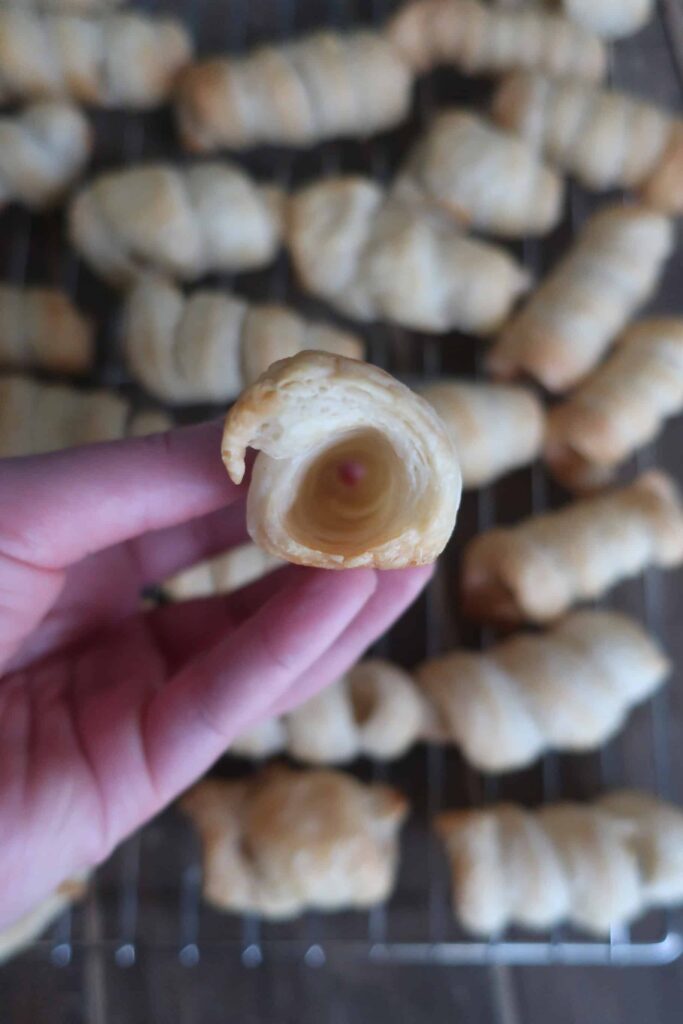
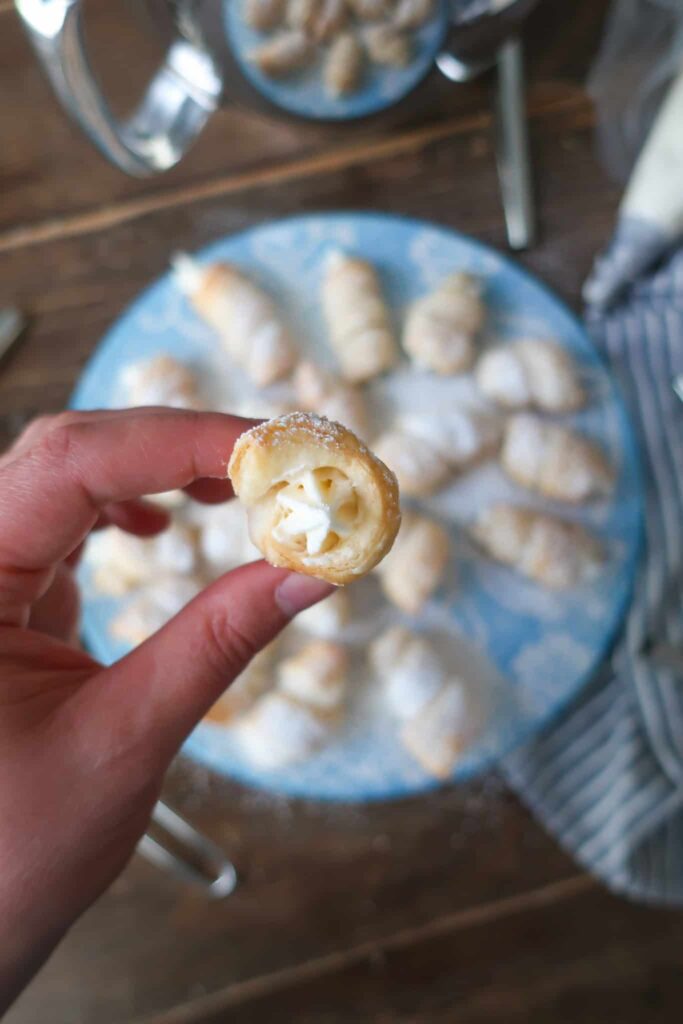
HOMEMADE PUFF PASTRY
The dough itself for puff pastry is a fairly straightforward blend: all-purpose flour, bread flour, salt, butter, water, and white wine vinegar. Stuff you likely already have in your kitchen pantry.
While there is a little bit of butter in the dough itself, the flaky layers in puff pastry come from the butter block you’ll roll into folds between the dough. The butter must be cold but pliable, as you roll it, so it doesn’t melt into the dough or break.
As it bakes, those butter layers will create steam and give you those perfect, bakery-worthy pastry layers right at home.
My biggest tip for making puff pastry is to pay close attention to temperatures. You want to work quickly and make sure your dough stays relatively cold, to keep those butter layers intact.
INGREDIENTS
- All-purpose flour: forms the base dough, giving structure and tenderness.
- Bread flour: adds strength and elasticity for well-defined flaky layers.
- Salt: enhances flavor and balances the butter’s richness.
- Unsalted butter: creates steam pockets during baking, producing crisp, flaky layers.
- Cold water: brings the dough together while keeping it cool to preserve flakiness.
- White wine vinegar: helps relax gluten, keeping the dough soft and easy to roll out.
How do you prevent your dough from sticking when rolling? Lightly flour the surface of your counter and dough as needed. Between each roll, gently lift your dough from the counter and place it back down to “feather” it, ensuring it’s not sticking as you go.
HOW TO MAKE PUFF PASTRY
Making the Dough
In a large bowl, combine all-purpose flour, bread flour, salt, and the small cubes of butter. Use your fingers to rub the butter into the dry ingredients until it forms small, crumbly pieces that will create a tender, flaky pastry base.
Create a well in the center of the mixture and pour in the cold water and vinegar. Stir with a spoon or dough scraper until a rough dough forms, then transfer it to your counter and knead for about five minutes to bring it together.
Chilling the Dough
Shape the dough into a rough rectangle, wrap it tightly in plastic, and refrigerate for 30–40 minutes. This resting time helps relax the gluten and firm the butter before rolling.
Once chilled, lightly flour your work surface and roll the dough into an 18×36 cm rectangle, lifting and flipping it often to prevent sticking. Lightly dust with flour as needed to keep the dough smooth and even.
Preparing the Butter Block
Cover the rolled dough in plastic wrap again and return it to the fridge while you prepare the butter block. Fold parchment paper into an enclosed 18×18 cm square to use as a guide for shaping your butter.
Place the butter inside the parchment and flatten it with a rolling pin until it evenly fills the square. Chill the butter briefly, if needed, so it stays firm but flexible before layering it into the dough.
Laminating the Dough
Remove your dough from the fridge and set the butter square in the center, brushing away any excess flour. Fold the top and bottom edges of the dough toward the middle so they meet, and pinch the seams to completely seal in the butter.
Rotate the dough 90 degrees on your work surface and lightly flour the counter again. Press down gently with a rolling pin to start lengthening the dough vertically, then flip it over to ensure even rolling on both sides.
Rolling and Folding
Roll the dough from the center outward until it reaches about 60 cm in length, dusting lightly with flour if needed. If the dough begins to retract, stop rolling — that means the gluten needs to rest to preserve those flaky layers.
Brush off any excess flour and perform an envelope fold by folding the top third of the dough down and the bottom third up. Turn the dough 90 degrees so the folds face sideways, wrap it in plastic, and refrigerate for 30–40 minutes to complete your first turn.
Completing the Turns
Check that your butter is between 52–61°F (11–16°C) before continuing to roll — this temperature keeps the butter pliable without melting. Repeat the rolling, folding, and chilling process two more times for a total of three turns to build perfect buttery layers.
After the final chill, your homemade puff pastry dough is ready to use in any recipe. Roll it out for tarts, turnovers, or savory pastries for crisp, golden, bakery-quality results every time.
3 reasons you’ll love this homemade puff pastry
TIPS & VARIATIONS
- You want everything cold, when working with homemade puff pastry (aka working in a hot kitchen might not work out well). Cold butter is what creates those signature flaky layers when it steams in the oven.
- European-style butter (with higher fat content) gives a richer flavor and smoother texture for laminating. But if you can’t find that, your regular butter will work.
- Handle the dough gently to prevent the butter from melting and the gluten from tightening — that helps the dough stay light and airy.
- Always chill your dough for at least 30–40 minutes between folds. This keeps the butter firm and the dough easy to roll.
- You need to roll and fold quickly so the butter doesn’t soften too much. If it starts feeling warm, stop and refrigerate for 10–15 minutes before continuing.
- Too much flour can dry out the dough and affect the rise. Light dusting as needed and frequent flipping (or “feathering”) prevent sticking without toughening the pastry.
- As you roll the dough longer, you won’t be able to flip it over when feathering. Simply gently lift the top, then the bottom, placing back down on the counter between each, to ensure it’s not sticking to the counter. Dust with flour as needed.
- Aim for a butter temperature between 52–61°F (11–16°C) when rolling — soft enough to move with the dough, but firm enough to hold layers.
- Don’t rush the chill time! Skipping or shortening rest periods can cause the butter to leak during baking, reducing flakiness.
- When you do go to bake your puff pastry, make sure your oven is fully preheated. Cold dough in a hot oven will help ensure a strong lift and flaky layers.
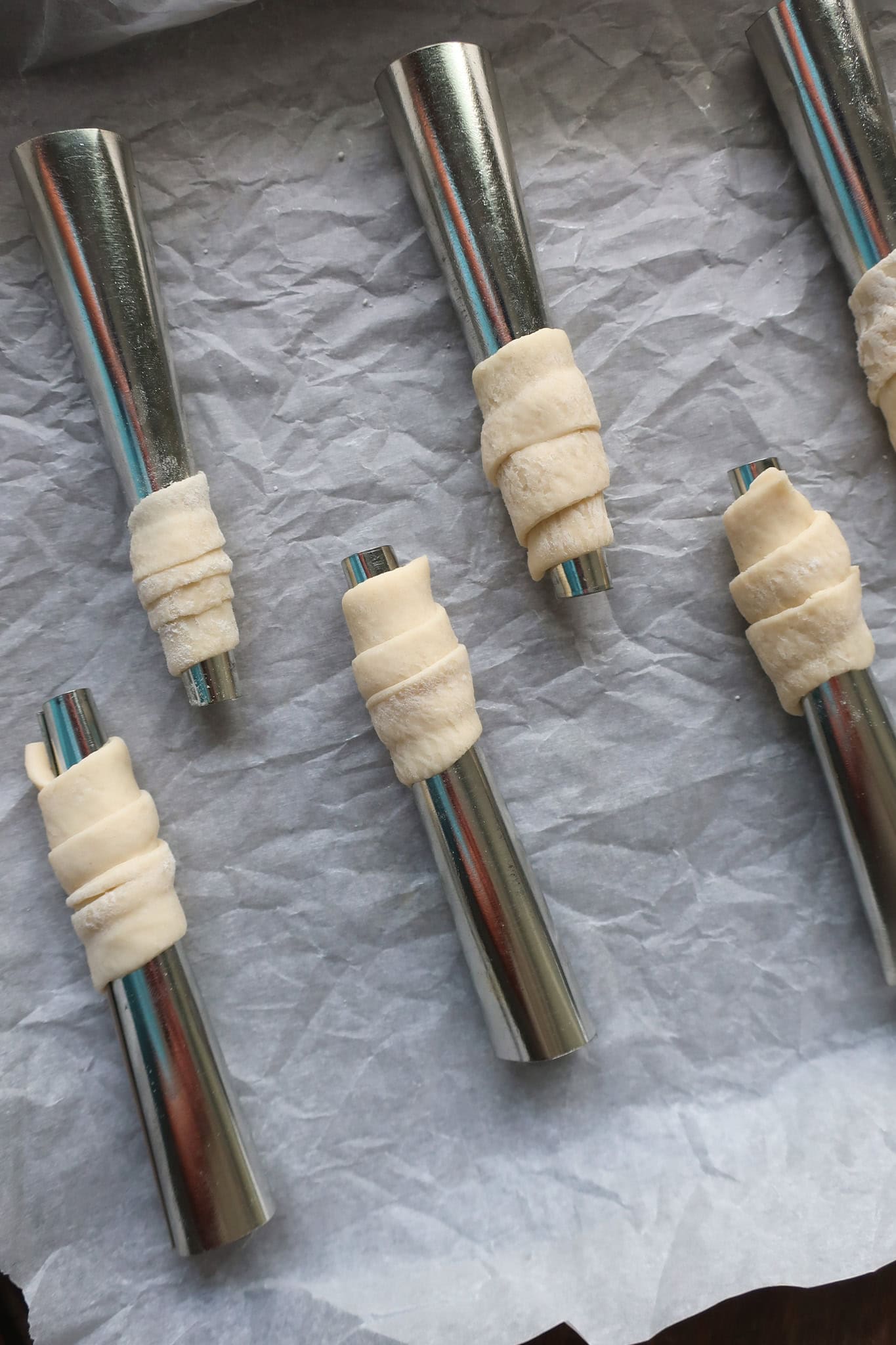
- Once made, use your puff pastry for sweet and savory recipes. Think turnovers, pot pies, tarts, palmiers, cream horns or anything that benefits from buttery, flaky layers.
MAKING AHEAD & STORING
To store your homemade puff pastry dough in the fridge, wrap it tightly in plastic wrap the place in the fridge for up to 3 days. When ready to use, let it soften slightly at room temperature (you want that butter around 52–61°F (11–16°C)) before rolling to your required thickness for baking.
To store your dough in the freezer, wrap it tightly in plastic wrap and then in foil (or place it in a freezer-safe bag). It will keep for up to 2 months in the freezer, just thaw overnight in the fridge the day before you plan to use.
Don’t re-freeze your dough! Too many temperature adjustments can affect your butter and ruin your chance at flaky layers. If you think you’ll need smaller portions of dough at a time, cut and freeze separately from the start.
MORE PUFF PASTRY RECIPES
- Lady Locks with Homemade Cream Filling
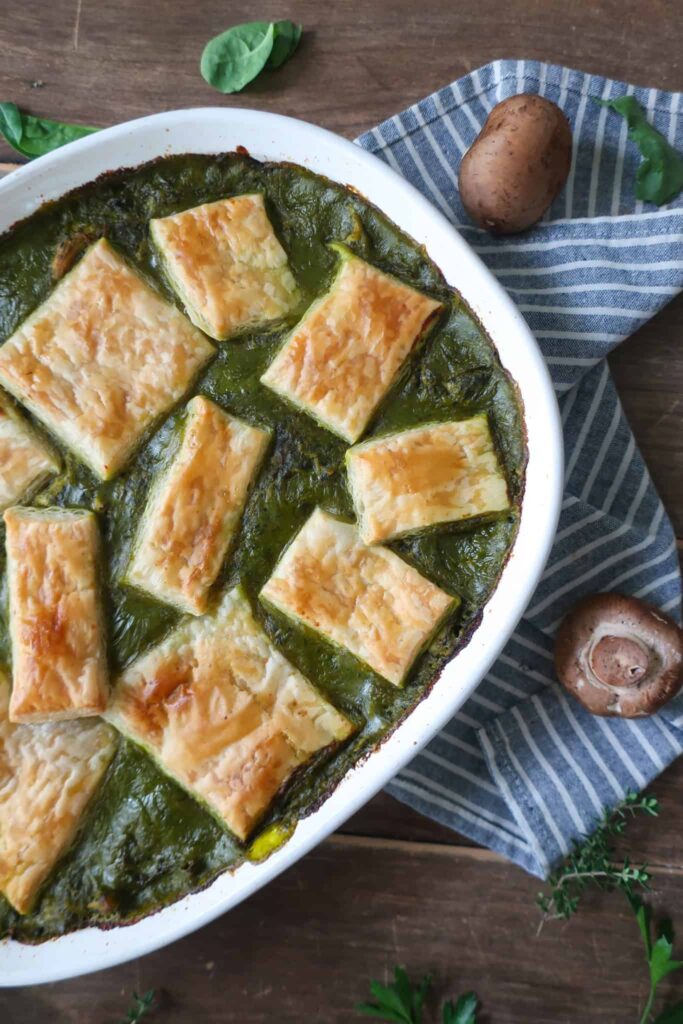
- Spinach & Mushroom Chicken Pot Pie
- French Onion Puff Pastry with Gravy
- Quick Asparagus, Garlic, & Goat Cheese Twists
- Peach-Basil Puff Pastry Tarts
EQUIPMENT YOU’LL NEED
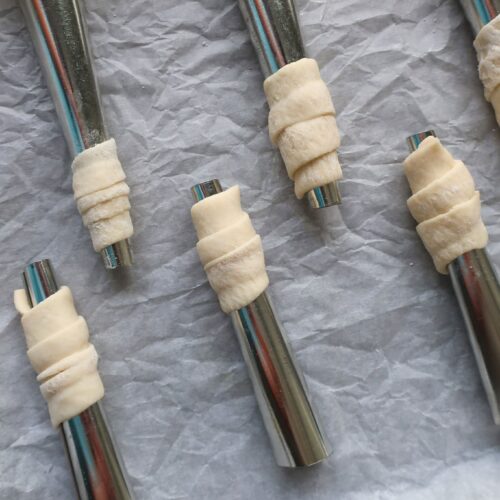
Equipment
- Rolling Pin
- Parchment Paper
- Digital Scale
- Teaspoons
- Mixing Bowls
- Dough Scraper
Ingredients
- 125 g all purpose flour
- 125 g bread flour
- 1 tsp salt
- 250 g unsalted butter split into 40g (small cubes) + 210g (block)
- 125 g cold water
- 5 g white wine vinegar
Instructions
- In a bowl, add the cubed 40g of butter, all-purpose flour, bread flour, and salt. Use your fingers to rub the butter into the dry ingredients until it is in small pieces.
- Create a well in the center of your mixture, pour in the cold water and vinegar, then cut through with a spoon or a dough scraper.
- Dump the dough onto your counter and knead for approximately 5 minutes.
- Flatten dough into a rectangle (as you can), cover in plastic wrap, and place in the fridge for 30-40 minutes.
- Lightly flour the counter and roll your dough to 18cm x 36cm. Be sure to “feather” your dough – lifting it from the counter and flipping it over after every roll – so it doesn’t stick or tear. Very lightly dust with flour if needed, as you roll.
- Cover your dough with plastic wrap and stick it back in the fridge while you prep your butter square.
- Create an 18cm x 18cm enclosed parchment square. Fold a piece of parchment in half, 18 centimeters wide when folded, and then fold over the excess on all other sides to have an enclosed square.
- Place your 210g block of butter between two butter wrappers and flatten it down with a rolling pin. Wacking it 3-4 times* to get it shaped into a flatter rectangle. Then place inside the middle of your 18cm x 18cm parchment square, fold the parchment closed, and roll the butter out flat, evenly filling the square.
- Remove your dough from the fridge and place your butter square into the center of the dough, dust off any excess flour on the inside of the dough.
- Fold the top half of the dough down to the middle of the butter square and the bottom half of the dough up to the middle, having the two seams meet. Gently pull the dough to shape as needed, so the seams evenly meet and the butter is covered. Pinch the dough seam together.
- Turn the dough 90 degrees from where originally rolled. Minimally flour your counter and the top of the dough square
- Gently press down with a rolling pin from top to bottom, to begin to help stretch the dough vertically, then flip over (keeping the dough in the same vertical direction) and press down again.
- Roll from the middle of the dough downward and then the middle of the dough upward – feathering in-between – until the dough is 60 cm long.
- Lightly dust with flour as needed between full rolls. Be sure to observe your dough as you roll it. You can roll it past 60cm, but if it starts retracting, it doesn’t want to be stretched further, so don’t push it.
- Once your dough is the right length, dust off any excess flour from the side facing up.
- Perform an envelope fold. Fold the dough ⅓ down, brush off excess flour from the side facing up, then fold the bottom ⅓ up (covering the dough you just folded down). Make sure all parts are evenly covered.
- Turn the dough 90 degrees, so your folds are now facing the side, wrap it in plastic, and place it in the fridge. This is your first turn. Refrigerate the dough for 30-40 mins.
- Once the refrigeration time is up, use a thermometer and stick it gently between your envelope folds to make sure your butter is between 52-61°F (11- 16 °C) before rolling. It’s very important that your butter is neither too warm nor too cold, or it could mess up your layers.
- You will need to do three turns in total. After your first turn above, roll again to 60cm, envelope fold, and refrigerate for 30-40 mins. Repeat one more time after this for your third turn.
- Once you’ve completed all three turns and refrigeration, congrats, you have puff pastry dough to use as you please*!